This article presents my research-based reconstruction of how the Yara lineage developed from the early 1300s onward. It examines the historical relationship between the Indigenous Yara line and the later Xue–Yara branch, and how this connection shapes the history of Chatan Yara. The aim is to clarify the structural continuity behind the name and its martial legacy.
The Chatan Yara Lineage of Okinawa
The Chatan Yara line stands among the oldest martial families of Okinawa. The name links several generations of officials and martial practitioners connected to the village of Chatan in central Okinawa and, in later generations, to Yomitan. Archival traces in Ryukyuan administrative records, local genealogies, and oral transmission point to a hereditary line that combined official service under the Ryukyu Kingdom with the private preservation of combative methods known as Te.
The records are fragmented, and many claims rely on oral tradition preserved in local family lines, village documents, and later writings. The surname Yara (屋良) is not rare in Okinawa, and several families still carry it today.
Historical Setting: Chatan and the Ryukyu Kingdom
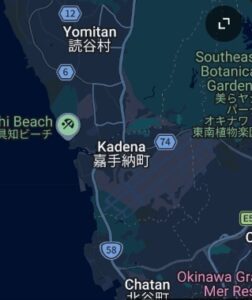
Chatan village lies on the western coast of Okinawa Island. During the Ryukyu Kingdom period, it fell within Nakagami district. The Ryukyuan court in Shuri governed through a ranked aristocracy that included titles such as pechin and ueekata. Many early martial traditions emerged within this official class.
The Yara surname appears in several Ryukyuan genealogical records. The name is associated with Chatan, Kadena, and Yomitan. In Ryukyuan naming practice, individuals were often identified by village plus family name. Thus, “Chatan Yara” refers to a member of the Yara family from Chatan.
Please note that Yara is also a district in Kadena, located between Chatan and Yomitan.
Two Independent Yara Families
Based on my research, I have concluded that two distinct families with the surname Yara historically existed in Ryukyu. They did not share a biological origin but represented two very different historical trajectories:
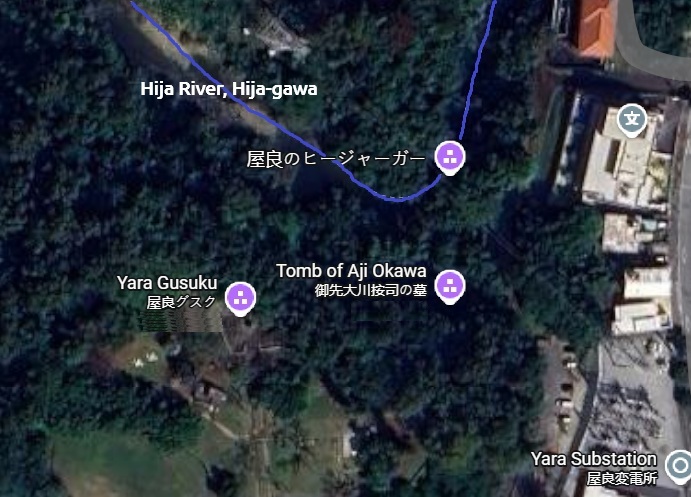
- The Indigenous Yara Lineage: An Okinawan warrior aristocracy (Aji/Pechin). They took their name from Yara Castle (Okawa-Jo) and have resided in the area since the 1300s (predating the arrival of the “36 Min Families“).
- The Xue-Yara Lineage: A lineage of Chinese bureaucratic descent (the Xue family from Kumemura). They only adopted the name “Yara” much later, around the 1600s or 1700s, when they were granted the Yara district as a fief by the King.
While the Xue name is not among the original “36 Min families”, the lineage likely emerged at a later date 2.
Their only connections are:
- Geography: Both families held property or titles linked to the same area (Yara/Chatan).
- Social Status: Both eventually became part of the kingdom’s nobility (shizoku) and held titles such as Pechin.
- Shared Surname: Because both used the place name “Yara” as their Okinawan surname, they are often conflated in historical narratives.
The Confusion Surrounding the Two Yara Families
Here is a simple explanation of the “Yara Mystery.” Imagine two different families moving onto the same street, and both adopting the street’s name as their surname; they are not related, but they share the same name.
| Point | Xue-Yara (Chinese branch) | Indigenous Yara |
|---|---|---|
| Origin | Potential descendants of the “36 Min Families” or a later group added to the original cluster. | Have always resided on Okinawa (Okawa lineage). |
| Home Base | Resided in Kumemura (The District of Scholars). | Resided at Yara Castle (Okawa-Jo), also called Yara-gusuku. |
| Why the name “Yara”? | Because the King granted them the Yara area as a reward, much later. | Because they built the castle and ruled the area from the beginning. |
| Strength | Diplomacy, literary knowledge, and supposedly Chinese martial arts. | Local warriors and masters of horsemanship and horse breeding for the King. |
| Famous Figure | Rishin Pechin (Horse Superintendent/Xue Rishin). | Okawa Aji (The powerful Lord of the castle). |
The Story in Brief
- The Indigenous (The Originals): Around the year 1300, a powerful man named Okawa Aji sits in his castle (Yara Castle) 1 and controls the river (Hija River, Hija-gawa). His family is the “true” Yaras. They are local warriors and masters of horsemanship and horse breeding for the King.
- The Chinese (The Scholars, Xue): Potential descendants of the “36 Min Families” or a later group from China. They are highly educated and live in their own exclusive district in Naha (Kumemura). They have nothing to do with Yara Castle… yet.
- The Confusion Arises: Several hundred years later (c. 1700), the King wishes to reward the scholarly Chinese of the Xue family. He grants them the “Yara District” as their fief. Now, they can use Yara as their surname in official documents.
(Xue-Yara: Xue was the inward Chinese name, while Yara was the outward Ryukyuan name). - The Fusion: Now, two families live in the same area, both named Yara. They begin working together for the King, they perhaps intermarry, and they likely train in martial arts together.
- The result: After many years, few remember who started as what. The martial arts master Chatan Yara ended up with the best of both worlds; he possessed the Chinese techniques from his Xue heritage and the local Okinawan courage, and perhaps a stable full of horses, from his life in Chatan.
In short: One family was composed of scholarly immigrants, the other of local lords. They ended up sharing a name, land, and martial arts, appearing today as one great, famous family.
Xue (薛) Surname and the Yara Branch (屋良家)
Formation of the Yara Branch (屋良家)
Within the Xue lineage, the Yara branch (屋良家) emerged as a local cadet line in Chatan/Yomitan, combining administrative service with martial practice over generations. The connection between the Xue and Yara families is documented in the genealogical register 薛姓家譜 支流屋良家 (Xue Family Tree: Yara Branch)2. The martial dimension is not recorded in the register but instead derives from later martial traditions and oral historiography. Certain lineage members became prominent in the transmission of martial arts, particularly within Chatan Yara Te and various weapon traditions.
Chatan and Yomitan Villages: The why and how?
The Xue surname (薛姓) served the Ryukyu Kingdom as scholars, interpreters, and officials. Over time, branches appear in districts along Okinawa’s western coast, including Chatan, Kadena, and Yomitan.
No surviving document records a single, clearly dated move to Chatan or Yomitan for a specific Xue or Yara individual. However, established historical patterns may explain how this movement could occur.
The Ryukyu Kingdom regularly assigned officials to posts outside Naha. Literate families filled roles as district administrators, tax supervisors, and local officials. When appointed to Chatan or Yomitan, residence there often followed and could become permanent.
Landholding also encouraged relocation. Chatan and Yomitan were productive agricultural areas. Secondary sons of elite families may have established branch households in rural districts.
Marriage created further movement. Men often relocated through marriage, especially when land or status was connected to the union. Genealogical compilations show branch lines tied to multiple districts, which reflects this pattern.
Chatan and Yomitan lie along the same western coastal corridor. Travel between them was practical and routine within the administrative system of the Ryukyu Kingdom.
The Yara surname (屋良家) appears in genealogical compilations connected to both Chatan and Yomitan. This distribution aligns with documented branch-family formation and administrative practice. No direct migration record identifying the exact moment of relocation has been identified in accessible historical materials.
The Political and Social Framework of the Ryūkyū Kingdom
From the 15th century until 1879, the Ryūkyū Kingdom operated under a ranked aristocratic system. Officials held titles such as:
- Pechin, a rank within the scholar-official class.
- Ueekata, a high administrative rank.
- Satonushi and Chikudun are lower bureaucratic ranks.
If the Indigenous Yara held the area, how could the King grant the Xue-Yara the same territory?
The answer lies in how power in Okinawa fundamentally shifted between 1400 and 1700.
- Phase 1: The Local Lords (c. 1300–1500)
In the beginning, the Ryukyu Islands were not a single kingdom. Okawa Aji (the indigenous Yara lineage) was an independent “petty king” in his own castle. He owned the land because he was strong enough to hold it. He was the law in his own domain. - Phase 2: Centralization (The Great “Disarmament”)
Around the year 1500, King Shō Shin carried out extensive reforms.: he forced all local lords (Aji) to abandon their castles (including Yara Castle) and move to the capital, Shuri.- The Result: The King took ownership of all land. The indigenous Yaras were no longer “owners” but “landless nobles” living at the King’s court. The land in the Yara district became the property of the Crown.
- Phase 3: The Reward System (c. 1600–1700)
Now that the King owned everything, he used the land as “payment” for his most loyal officials. The Xue family had served the King faithfully for generations as diplomats. In gratitude, the King granted them the right to collect taxes and administer the Yara district. This was known as a Chigyo-chi (a fief).- The Name Change: Since the Xue family were now the official administrators of the Yara district, they began using the name Yara as their Okinawan title (their Kamon) to demonstrate their status to the local population.
The Core Question
Are the two families, Xue-Yara and the Indigenous-Yara, merged into one?
The Evidence for a Structural Link:
While direct documentary proof for every generation is incomplete, a hereditary line is structurally plausible based on:
- Geographic clustering: Both families are tied to Chatan and Yomitan.
- Rank continuity: A clear pattern of aristocratic titles remains consistent across generations.
- Generational Spacing: The chronological timeline shows a consistent succession without gaps, supporting a natural hereditary transition.
- The Yara Identifier: The repeated use of “Yara” in martial arts history suggests a shared identity.
The concentration of the surname in a single district supports this continuity. However, since many official court registries were lost, the hypothesis of a unified Yara line remains a compelling theory rather than a documented fact.
The Paradox: Why would the King give the land to the Chinese?
It seems strange that the King would displace the indigenous Yara only to grant their land to the Xue-Yara family. This paradox is the key to Okinawan history. It was not about punishment, but about absolute power.
- The Problem with “Petty Kings”: The indigenous Yara (Okawa lineage) were loyal, but they were still “petty kings” in their own castle. History, like the rebellion of Lord Amawari 3, had shown that local power was dangerous.
- The Great Relocation (c. 1500): King Shō Shin decreed that no nobles could live in their own castles. All lords (Aji) were forced to move to the capital, Shuri, to be kept on a “short leash.”
- The Strategic Swap: The indigenous Yaras kept their noble titles and wealth in the capital, but they lost their physical stronghold. To manage the vacant district, the King chose the Xue family.
- Why the Xue? As immigrants, the Xue family had no local army or deep-rooted kinsmen to support a rebellion. Their power was entirely dependent on the King. They were the perfect loyal bureaucrats.
Summary:
This political reshuffling brought the two families together in the Chatan/Yomitan area. The indigenous branch preserved its historical name and its tradition of horsemanship, while the Chinese branch held the official deeds to the land. Over time, these two identities, the local warrior and the royal manager, merged into one.
Why do we remember them in 2026?
Today, the Chatan Yara lineage is celebrated because they were among the first in the context of martial arts. By combining the Xue family’s ability to maintain archives with the physical prowess of the local nobility, they ensured that their knowledge was not lost when the old kingdom vanished.
Possible family lineage
The following reconstruction combines genealogical records with later martial tradition. Martial attribution is primarily based on 19th–20th century sources.
| Family / Individual | Period | Role / Status | Region | Martial Evidence |
|---|---|---|---|---|
| Indigenous Yara lineage (Okawa Aji / Yara Castle line) | c. 1300s–1500s | Aji (local lord) / Regional warrior aristocracy | Yara Castle (Okawa-Jo), Chatan area | Not confirmed |
| Xue family (薛姓). Potential 36 Min descendants or later immigrant cluster | c. 14th–17th c. | Scholars, interpreters, Pechin bureaucrats | Kumemura (Naha) | Oral tradition only |
| Yara branch (屋良家) – Xue cadet line | c. 1600s–1800s | Pechin class / District administrators (Chigyo-chi holders) | Chatan / Yomitan | Oral tradition only |
| Chatan Yara (北谷屋良) | 1668–1756 | Ueekata or Pechin / Court liaison, local governance | Chatan / Yomitan | Traditionally recognized as a martial practitioner, associated with Chatan Yara no Sai / no Kon |
| Chatan Yara | 1740–1812 | Pechin-level / Local administrator | Yomitan | Traditionally recognized as a martial practitioner, associated with Kushanku |
| Chatan Yara (Yara Guwa / Rishin Pechin Yara) | c. 1816–1890s | Rishin Pechin / Royal stable superintendent | Yomitan | Traditionally recognized as a martial practitioner, associated with Yara Guwa no Tonfa |
Known Martial Artist Named Yara
Chatan Yara 1668–1756
Chatan Yara (北谷 屋良, 1668–1756), also known as Ueekata and Yomitan Yara, is credited with being one of the first to disseminate martial arts (te) throughout Okinawa Island. He is one of the earliest identifiable figures bearing the Yara name.
Historical Position
He is associated with Chatan and later with Yomitan. Some sources describe him as holding the rank Ueekata. If the Ueekata title is accurate, it indicates a high administrative rank within the Ryūkyū government. Such officials maintained direct contact with the royal court in Shuri.
Martial Attribution
Tradition credits him with:
- Introducing structured Te practice beyond narrow aristocratic circles.
- Maintaining connections with Chinese martial influence.
- Possibly training in Fujian or interacting with Chinese envoys.
The cultural exchange between Ryūkyū and Qing China during the 17th and early 18th centuries supports the possibility of further Chinese influence. Chinese investiture missions regularly visited Okinawa, and aristocrats often interacted with these envoys.
Archival Evidence
Direct documentation naming him as a martial instructor remains limited. However:
- Village genealogies in Chatan and Yomitan preserve the Yara family name.
- Aristocratic registries from Shuri list individuals with similar titles and regional origins.
Chatan Yara (1740–1812)
A second figure bearing the name appears in later martial narratives. He is identified as a Te and Kobudō practitioner.
This timeline overlaps with the late life of the earlier Yara. Two possibilities emerge:
- He was a son or grandson of the earlier figure.
- He belonged to a related Yara branch within the same district.
Social Rank
Sources often describe prominent Te practitioners from this era as holding the Pechin title.
During this period, martial knowledge often remained within:
- Aristocratic families.
- Village elite administrators.
- Officials responsible for tax supervision, land registry, or court functions.
Relationship to the Royal Court
Chatan and Yomitan lie close to Shuri. Aristocrats residing outside Shuri commonly held provincial administrative posts.
If this Yara maintained aristocratic status, he would have:
- Maintained bureaucratic contact with Shuri.
- Possibly trained Te alongside other aristocrats connected to court service.
Direct evidence tying him personally to the king remains indirect, but the rank structure makes contact plausible.
Chatan Yara (c. 1816–1890s)
Also known as Yara Guwa or Rishin Pechin Yara. This person is better documented through late 19th-century accounts. He held the title Rishin Pechin. The Pechin rank confirms aristocratic standing. “Rishin” likely reflects a personal name within the official hierarchy.
Royal Stable Superintendent
Accounts describe him as serving as royal stable superintendent (cf. Nagamine Shoshin). This role involved:
- Management of horses used in royal transport.
- Oversight of palace livestock.
- Administrative responsibility within the court system.
Such a position required an official appointment and a high degree of trust, confirming a direct responsibility within the palace administration. At the time, horses were vital to both transportation and warfare, making this a role of strategic importance.
Residence in Yomitan
He reportedly lived in Yomitan during his later years.
Thanks for reading
Gert
Footnotes
1 Yara Castle (屋良城 / Yara-gusuku) is located in the Yara area of what is now Kadena Town near the Hija River on Okinawa’s western side.
2 The Yara lineage is associated with the genealogical register titled 薛姓家譜 支流屋良家 (Xue family tree to Yara branch), identifying the Yara house as a branch of the Xue surname line within the Ryukyuan aristocratic record system.
3 Lord Amawari (died 1458) was a legendary 15th-century anji (lord) of Katsuren Castle in Okinawa, celebrated for fostering prosperity through trade. Though often depicted as an ambitious figure who seized power, he is also portrayed as a popular leader, ultimately defeated by Shuri Castle forces after attacking rival Gosamaru. Following his attack on Gosamaru, Amawari was defeated by the royal army of the Shuri Kingdom in 1458, resulting in his death and the end of the powerful lords of Katsuren.
Share this article
Great breakdown Its gives a quite new perspective which I havent considered before
Wow, truly eye-opening. Really connects the dots and gives meaning.
Excellent analysis very illuminating